
Source: UF College of Nursing
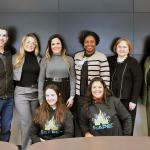
A delegation of nursing and computer science faculty and graduate students from the Federal University of Alfenas (UNIFAL) in Brazil recently visited the University of Florida, deepening a growing international collaboration centered on nursing informatics, artificial intelligence and innovation in primary care.
The group is part of a federally funded Brazilian research team developing an electronic health record system designed specifically for nursing practice in primary care. By integrating artificial intelligence and predictive analytics, the system aims to better capture the impact of nursing care on patient outcomes — especially for underserved populations.
This visit builds on a growing partnership between UF and UNIFAL, supported by a formal memorandum of understanding and previous collaborative research. UF College of Nursing faculty, Tamara Macieira, PhD, RN, FAMIA, UF Nursing Assistant Professor, has long worked with the Brazilian team on informatics and data-driven nursing projects, and the visit offered an opportunity to deepen those relationships while exploring exciting new avenues for collaboration in both research and education.
During their time at UF, the visitors met with College of Nursing faculty and leadership, including Shakira Henderson, PhD, DNP, MS, MPH, EMBA, IBCLC, RNC-NIC, dean of the college and chief nurse executive for UF Health, and Ann L Horgas, PhD, RN, FGSA, FAAN, executive associate dean of the college.
The group toured UF Health Shands clinical units to see hospital operations firsthand and visited the UF Health Archer Family Health Care clinic, a nurse-practitioner-led facility serving a rural population. They also explored the College of Nursing’s simulation labs, met with the director of UF’s AI Informatics Institute, and toured HiPerGator, UF’s high-performance computing center.
For many in the group, the scale and scope of UF’s research infrastructure left a strong impression.
“It feels like a new world for us,” said Tiago Silveira, a computer scientist from UNIFAL. “Our university in Brazil is much smaller, so being here has changed how we think about universities, research and what is possible. This experience has really expanded our perspective.”
Others shared similar reflections, describing the visit as both inspiring and affirming. Observing how electronic health record data, especially standardized nursing data, are used for research and modeling in U.S. health systems reassured them that their work in Brazil is on the right path.
“They are seeing that the goals, infrastructure and design of the system they are developing align closely with what is being done here,” Macieira said. “They are learning ways to strengthen their work while also gaining confidence that their approach can truly elevate nursing practice.”