
The University of Florida (UF) has been a member of the Organization for Tropical Studies (OTS) since 1963. OTS is a consortium of roughly fifty academic and research institutions dedicated to science, conservation, and responsible resource use in tropical regions. UF is a founding member of OTS, becoming a permanent member through UF/IFAS in 2014. In 2025, UF’s Distinguished Professor Dr. Rafael Muñoz‑Carpena was re‑elected to the OTS Board of Directors, reinforcing the university’s enduring commitment to the organization’s mission.
OTS operates in three countries, with research stations and educational programs in Costa Rica and South Africa. The chain of collaboration has placed UF at the forefront of tropical biology and conservation, training thousands of students and providing pioneering opportunities for field‑based research and study abroad. The faculty’s deep ties to OTS’ Palo Verde Research Station in Palo Verde National Park have yielded decades of data and discoveries about hydrology, ecology, and climate change impacts in one of the world’s most significant tropical ecosystems.
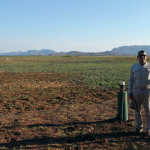
Dr. Muñoz‑Carpena first joined forces with OTS in 2010, leveraging NSF funding to deploy a dense network of 120 sensors across Costa Rica’s Palo Verde National Park (PNPV). These instruments captured rain, stream flow, groundwater, soil moisture, and salinity every fifteen minutes, producing a continuous database that spanned 2012–2018. When combined with satellite imagery and regional watershed data, the resulting analyses revealed how upstream land use and shifting climate drive hydrological and vegetative changes even over the park’s diverse landscape.
In addition to this data collection, the UF team organized and chaired several stakeholder workshops with the Costa Rican National Park Service, Earth University, and through the UF Water Institute, creating a platform for scientists, policy makers, and local partners to exchange ideas and shape future research agendas. Dr. Muñoz‑Carpena’s mentorship has guided nine Ph.D. and four master’s students in ecohydrology during the same period; many of whom have gone on to hold prominent positions in academia and industry worldwide.
The data‑rich research supported by OTS at Palo Verde fostered a transdisciplinary doctoral cohort funded by the UF Water Institute that brought together eight engineers, biologists, meteorologists, sociologists, and lawyers. These were leveraged with three additional master’s students from Université Catholique de Louvain (Belgium) who developed their theses in this project. This team examined the Tempisque–Bebedero watershed in an integrated manner, ensuring that hydrological insights inform ecological conservation, policy decisions, and social outcomes. Dr. Muñoz-Carpena added, “The Tempisque Project has been one of the most enriching projects for our students in my career. It provided a unique opportunity for integration and systems thinking across disciplines. Students discovered cascading and unintended effects of limited objective management decisions in a complex water system. It also provided them with a unique international experience in a fantastic location. OTS, with the support provided by its research station in Palo Verde, was a cornerstone of this effort, which clearly illustrates the opportunities that OTS can offer to our graduate students and the University community at large. Meaningful international work cannot be achieved without strong local partners. OTS generously facilitated these and provided a ‘family away from home’ to our students while abroad.”
OTS offers a rich catalogue of field courses that can be taken by UF students as part of their programs with other students from the consortium and external partners. The Environmental Sciences and Policy program (ESP) at OTS, established in 1988, complements the research by equipping decision makers and policy professionals with ecological knowledge and policy tools tailored to tropical systems. ESP courses combine ecological principles, conservation issues, and policy context, delivering a science‑based framework for stakeholders in public, private, and non‑governmental sectors. UF’s involvement in ESP courses has placed its faculty and students at the center of efforts that shape sustainable development strategies in tropical governments and organizations.
Through the combination of advanced research, student training, data stewardship, and interdisciplinary policy education, UF’s partnership with OTS remains a cornerstone of tropical science and conservation stewardship worldwide. The permanent membership of UF in OTS with its opportunity to have a voice on the OTS Board of Directors, and UF’s continued engagement in OTS initiatives underscore a shared vision: to advance global understanding of tropical ecosystems and to cultivate leaders who protect and responsibly manage these vital systems for generations to come.