
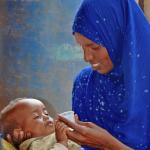
Source: UF College of Public Health & Health Professions
Scientists with the University of Florida College of Public Health and Health Professions and Ethiopia’s Haramaya University have been awarded a Gates Foundation grant to develop a holistic understanding of the multiple factors affecting women’s health across the lifespan.
Previous approaches to measuring women’s health have largely focused on the reproductive years and have often left out the multiple other factors influencing the health of females from birth to older age, said Sarah McKune, Ph.D., who leads UF’s role in the project.
“We recognize that women’s health begins in childhood and that the lived experience of girls and women is shaped by their environment, cultural practices and other factors, all of which vary over time, across space and throughout the life course,” said McKune, an associate professor and interim chair of the PHHP Department of Environmental and Global Health.
The project builds on a longstanding collaboration between Haramaya University, the lead institution, and UF. Getachew Teshome, Ph.D., an associate professor of mathematical modeling at Haramaya University, serves as the project’s principal investigator.
The research team plans to leverage existing data and AI technology to develop a multidimensional index that measures and predicts age-specific health burdens and gains for girls and women from early childhood to late adulthood as well as a population-level index for overall women’s health. Findings can be used to identify health outcomes across groups and guide policy and funding decisions.
The Gates Foundation awarded the team funding through its Global Grand Challenge on Innovative Data and Modeling Approaches to Measure Women’s Health. The challenge focuses on finding better methods to measure women’s health by using available or easily obtainable data in new ways.
UF co-principal investigators include Nargiza Ludgate, Ph.D., a research assistant scientist in the Department of Agricultural and Biological Engineering at the College of Agricultural and Life Sciences, and Chhavi Tiwari, Ph.D., a postdoctoral associate and public health economist in the Department of Environmental and Global Health.
“Our research will provide policymakers with a data-driven tool to simulate and examine how health and other factors and interventions affect the overall and age-specific health of women and girls,” Tiwari said. “Policymakers can identify high-risk populations, prioritize investments and simulate how policy changes across sectors, including health, education, social protection and water, sanitation and hygiene, would improve outcomes for women and girls at different life stages.”